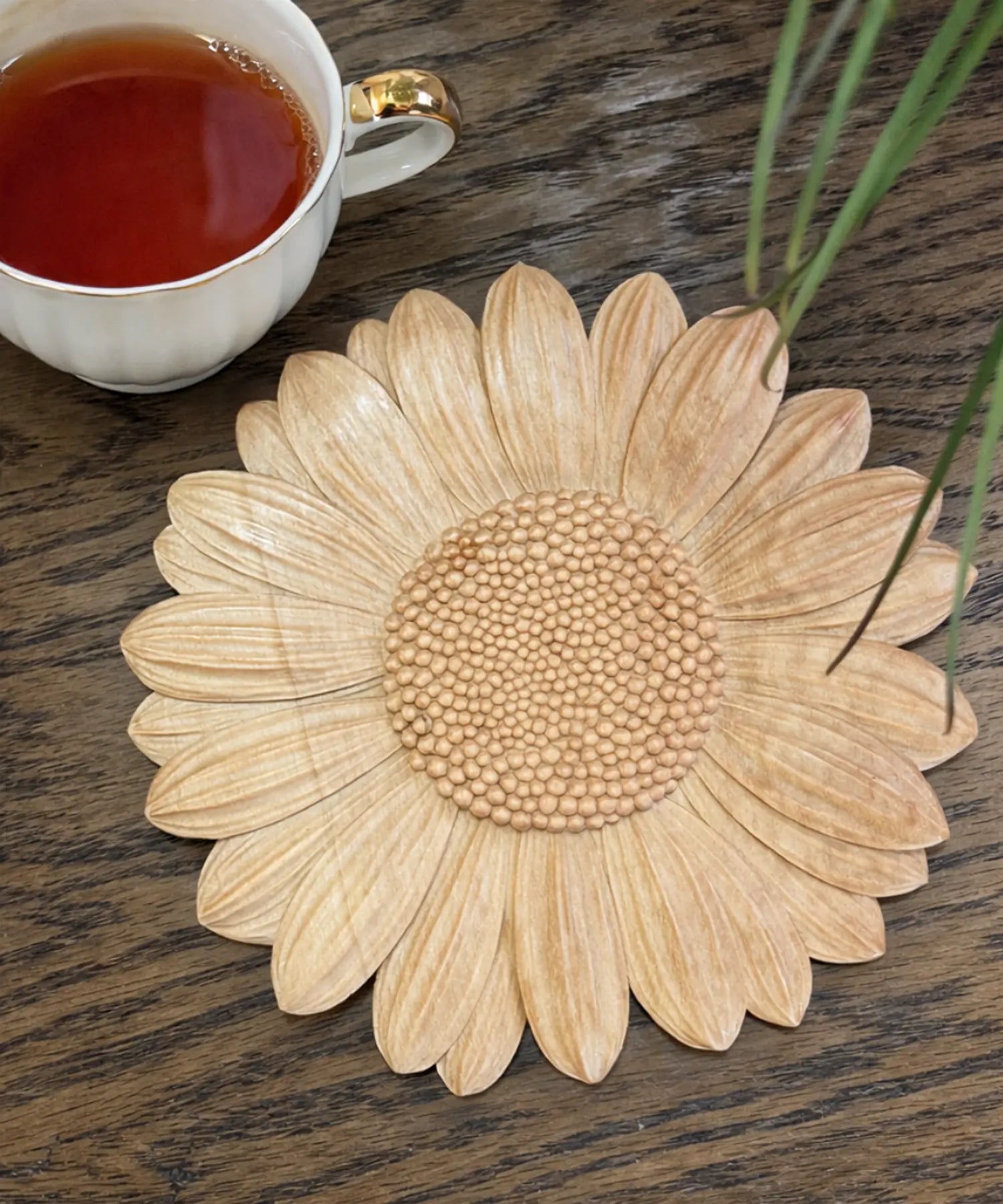

The Carving Process
Each piece is shaped step by step — from the first outline to the final finishing — through careful hand carving and patient refinement.
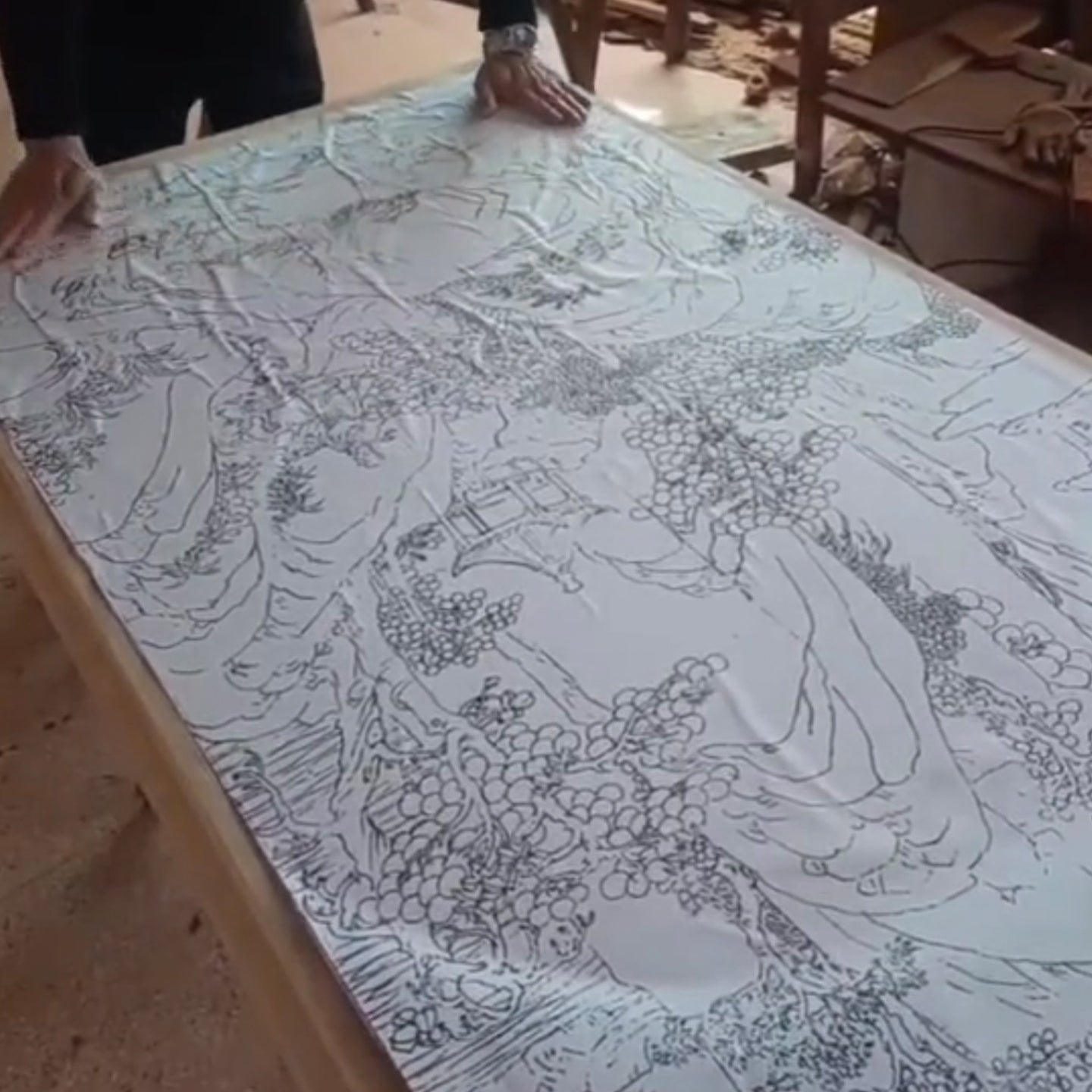
1. Design
For any wood carving artwork, design serves as the crucial initial phase. At its core are innovation and thoughtful conception, which ultimately become the very spirit of the finished work.
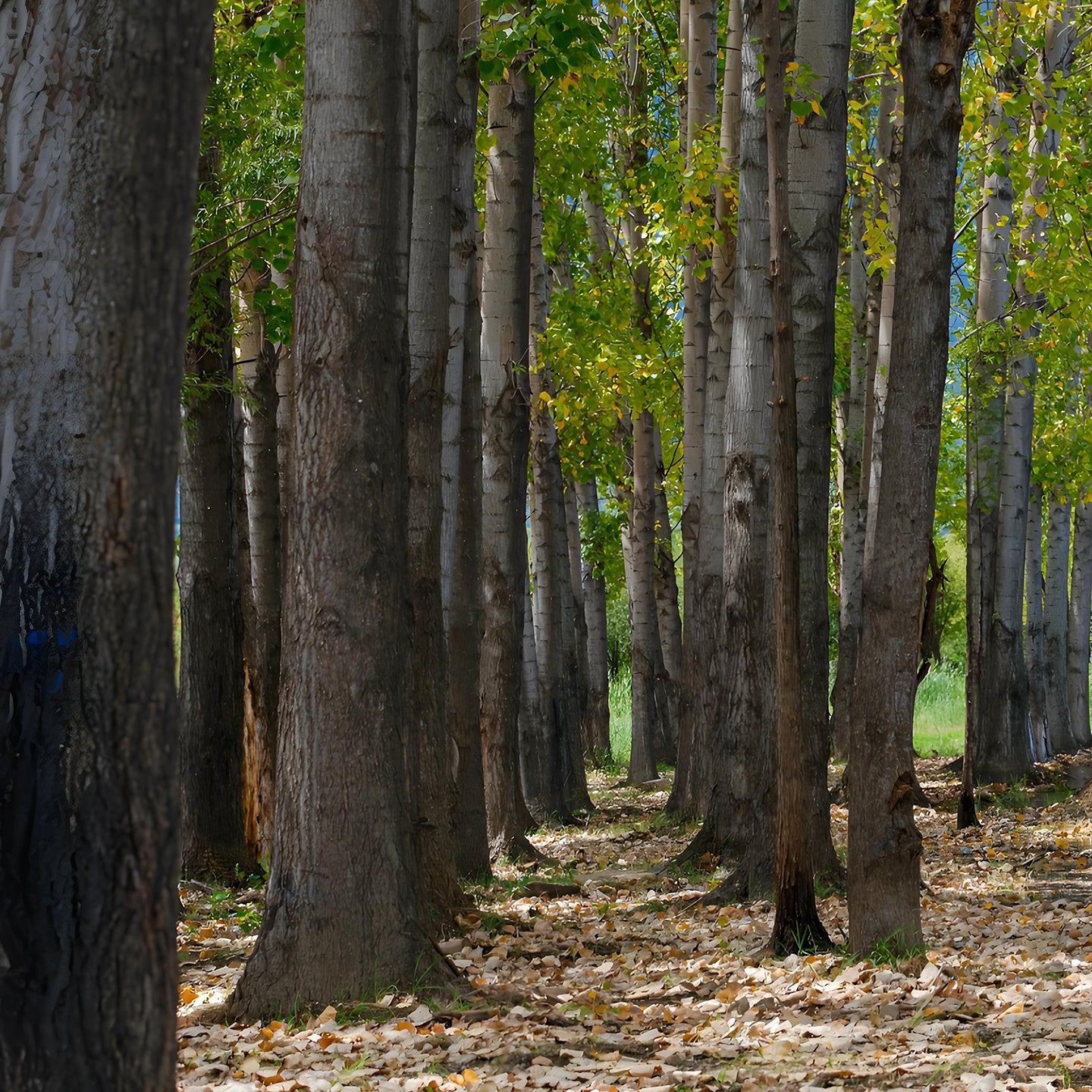
2. Material selection
Appropriate wood is selected based on the design's style and the carving technique employed.

3. Rough carving
This stage involves translating the flat lines of the design into a three-dimensional form, completing the initial sculptural shape and refining its basic contours.

4. Fine carving
The basic contours of the wood carving are meticulously sculpted and refined, aiming to achieve a delicate, smooth, and exquisite finish.

5. Polishing
After the intricate carving is complete, the entire piece is sanded and polished to enhance its overall texture and feel.

6. Finished piece
Wood carving is a precious cultural heritage, distinguished by its exquisite craftsmanship, rustic elegance, and vibrant, unrestrained character. It truly stands alone.

At YX Wood, carving is not simply decoration.
Our Approach
Each piece begins with the character of the wood itself — its grain, tone, and natural form.
Our aim is to create wooden objects that feel at home in everyday life, combining practical use with the quiet beauty of hand carving.
The Art of Wood Carving
Wood carving combines a range of traditional techniques, each revealing different layers of form and detail.
Together they give every piece its depth, texture and distinctive character.

Stacked carving builds depth by layering multiple tiers of carved patterns. Artists first sculpt a base layer, then add successive layers with intentional spacing and offsets, creating a dynamic, three-dimensional composition.
The staggered layers enhance visual depth and narrative complexity, making this technique ideal for depicting scenes, landscapes, or elaborate motifs in large-scale works.

This technique involves hollowing out the wood around the design to create a see-through, intricate pattern. By removing excess material, the carved motif stands out with delicate, airy details. High skill is needed to maintain the design’s structural integrity while achieving fine layers and transparency.
It is widely applied to decorative screens, windows, and furniture panels for an elegant, light-filled effect.

Relief carving creates a raised design on a flat surface, with the depth of the motif determining the style:
Low relief: Shallow, subtle elevation with minimal depth, focusing on linear details (e.g., floral patterns or facial features).
High relief: Deeper carving that creates strong shadows and dramatic contrast, allowing motifs to "project" more prominently from the background.
This technique is widely used in architectural decorations, plaques, and furniture to add decorative depth without full three-dimensionality.

This technique, known as full-round carving, creates three-dimensional wood sculptures that can be viewed from any angle—such as figures, animals, and decorative objects—giving them realistic volume and spatial proportion.
It is commonly used for freestanding pieces and decorative sculptures.
Stacked carving builds depth by layering multiple tiers of carved patterns. Artists first sculpt a base layer, then add successive layers with intentional spacing and offsets, creating a dynamic, three-dimensional composition.
The staggered layers enhance visual depth and narrative complexity, making this technique ideal for depicting scenes, landscapes, or elaborate motifs in large-scale works.
This technique involves hollowing out the wood around the design to create a see-through, intricate pattern. By removing excess material, the carved motif stands out with delicate, airy details. High skill is needed to maintain the design’s structural integrity while achieving fine layers and transparency.
It is widely applied to decorative screens, windows, and furniture panels for an elegant, light-filled effect.
Relief carving creates a raised design on a flat surface, with the depth of the motif determining the style:
Low relief: Shallow, subtle elevation with minimal depth, focusing on linear details (e.g., floral patterns or facial features).
High relief: Deeper carving that creates strong shadows and dramatic contrast, allowing motifs to "project" more prominently from the background.
This technique is widely used in architectural decorations, plaques, and furniture to add decorative depth without full three-dimensionality.
This technique, known as full-round carving, creates three-dimensional wood sculptures that can be viewed from any angle—such as figures, animals, and decorative objects—giving them realistic volume and spatial proportion.
It is commonly used for freestanding pieces and decorative sculptures.